Retinol for Beginners: How to Start Without Wrecking Your Skin
The most effective anti-aging ingredient comes with a learning curve. Here's how to navigate it.
Ask ChokChok AI
Get instant answers about "Retinol for Beginners: How to Start Without Wrecking Your Skin"
Try asking
What Retinol Actually Does
Retinol is the most well-studied anti-aging ingredient in skincare. Full stop. Decades of clinical research have demonstrated its ability to:
- Accelerate cell turnover — old, damaged skin cells are replaced faster
- Stimulate collagen production — the protein responsible for skin firmness and elasticity
- Reduce fine lines and wrinkles — with consistent use over months
- Fade hyperpigmentation — by speeding up the turnover of pigmented cells
- Improve skin texture — pores appear smaller, surface becomes smoother
Retinol is a form of vitamin A. It's converted into retinoic acid (the active form) by enzymes in your skin. This conversion process is why retinol is gentler than prescription tretinoin — it's a slower, more gradual delivery of the same active compound.
Why Retinol Has a Reputation Problem
Everyone who's tried retinol knows about "the retinol uglies" — a period of dryness, peeling, redness, and sometimes purging that happens when you first start using it. This adjustment period scares a lot of people off.
Here's the thing: most of these side effects are caused by starting too strong, too fast. Retinol irritation isn't inevitable. It's a sign you're pushing your skin harder than it can handle.
The biggest mistake retinol beginners make is treating it like any other serum — applying a generous amount every night from day one. Retinol demands a slow introduction.
How to Start Retinol: The Beginner Protocol
Step 1: Choose the Right Concentration
For true beginners, start with 0.025-0.05% retinol or consider bakuchiol as a gentler alternative. Bakuchiol provides similar (though less potent) benefits without the irritation profile of retinol.
Avoid jumping straight to 0.5% or 1% retinol. You'll likely damage your barrier and quit before seeing results.
Step 2: Start Slow
- Weeks 1-2: Apply once per week, on clean dry skin at night
- Weeks 3-4: Increase to twice per week
- Weeks 5-6: Increase to three times per week
- Weeks 7-8: Every other night (if tolerated)
- Months 3+: Nightly use (if desired and tolerated)
If at any point you experience significant redness, peeling, or stinging, stay at your current frequency for another 2 weeks before increasing.
Step 3: Buffer It
The "sandwich method" reduces irritation significantly:
- Apply moisturizer to clean skin
- Wait 5 minutes for it to absorb
- Apply retinol
- Wait 5 minutes
- Apply another layer of moisturizer
The moisturizer buffer slows down retinol absorption, reducing the concentration that hits your skin at once. As your tolerance builds over months, you can eventually apply retinol directly to bare skin.
Building a K-Beauty Routine Around Retinol
Retinol needs a supporting cast of gentle, hydrating products. This is where K-Beauty excels.
Evening Routine (retinol nights):
- COSRX Low pH Good Morning Gel Cleanser
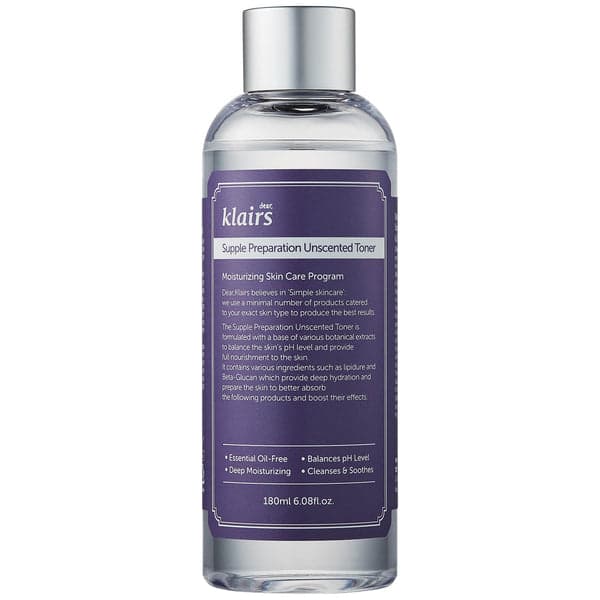
- Klairs Supple Preparation Toner (hydration layer)
- Etude SoonJung 2x Barrier Cream (first buffer layer)
- Retinol product
- Etude SoonJung 2x Barrier Cream (second buffer layer)
Evening Routine (non-retinol nights):
- COSRX Low pH Good Morning Gel Cleanser
- Klairs Supple Preparation Toner
- COSRX Advanced Snail 96 Mucin Essence
- Your regular moisturizer
Morning Routine (every day):
- Gentle cleanser or water rinse
- Hydrating toner
- Moisturizer
- Sunscreen — non-negotiable. Retinol increases photosensitivity. Skipping sunscreen while using retinol is counterproductive.
Retinol vs. Bakuchiol
Bakuchiol has gained popularity as a "natural retinol alternative." A 2019 study published in the British Journal of Dermatology found that bakuchiol produced comparable improvements in wrinkles and pigmentation to retinol over 12 weeks, with significantly less scaling and stinging.
Choose retinol if: You want the strongest evidence-backed results and are willing to manage the adjustment period.
Choose bakuchiol if: You have very sensitive skin, are pregnant or nursing (retinol is contraindicated), or want gentler results with fewer side effects.
Ingredients to Avoid Combining with Retinol
- AHA/BHA on the same night. Both exfoliate; combining them increases irritation risk. Use acids on non-retinol nights.
- Vitamin C at the same time. While they can be used in the same routine (vitamin C in the morning, retinol at night), layering them together can cause irritation for sensitive types.
- Benzoyl peroxide. Can deactivate retinol. If you need both, use them at different times of day.
Ingredients That Help with Retinol
- Niacinamide — buffers irritation and supports barrier function. Excellent companion.
- Ceramides — replenish barrier lipids that retinol can deplete.
- Panthenol — soothes irritation and supports healing.
- Centella asiatica — calms inflammation during the adjustment period.
- Hyaluronic acid — counteracts the dehydration retinol can cause.
The Timeline: When to Expect Results
- Weeks 1-4: Adjustment period. Possible dryness, peeling, or purging.
- Weeks 4-8: Skin texture starts improving. Surface feels smoother.
- Months 2-3: Fine lines begin to soften. Skin tone becomes more even.
- Months 3-6: Significant improvement in texture, tone, and fine lines.
- Months 6-12: Maximum benefits become visible with consistent use.
Retinol is a long game. If you're not willing to commit for at least 3 months, you won't see meaningful results. But if you are, it's the single most effective topical anti-aging ingredient available without a prescription.
Keep Reading
Skincare During Pregnancy: What's Actually Safe (and What to Drop)
A clear-eyed guide to which K-beauty ingredients are safe during pregnancy and which need to go. Covers retinol alternatives, safe actives like niacinamide and azelaic acid, and how to build a minimal but effective routine for 40 weeks.
Skincare After Botox: What to Use, What to Skip, and When to Resume
A practical guide to skincare after Botox injections. Covers what to avoid in the first 24-48 hours, which ingredients complement Botox results, and how to build a K-beauty routine that maximizes your investment.