Best K-Beauty Products for Hyperpigmentation and Dark Spots
Fading dark spots takes patience and the right ingredients. Here's what actually works.
Ask ChokChok AI
Get instant answers about "Best K-Beauty Products for Hyperpigmentation and Dark Spots"
Try asking
Understanding Hyperpigmentation
Hyperpigmentation is one of the most common skincare concerns, and one of the most stubborn to treat. Those dark spots — whether from acne scars, sun damage, hormonal changes, or inflammation — form when melanocytes overproduce melanin in response to a trigger. The pigment gets deposited in the upper layers of skin and stays there until those cells naturally turn over.
The bad news: fading hyperpigmentation is slow. We're talking months, not weeks.
The good news: multiple ingredients with strong clinical evidence can accelerate the process, and K-Beauty offers excellent options at accessible price points.
Types of Hyperpigmentation
Not all dark spots are the same, and knowing your type helps you choose the right approach:
Post-inflammatory hyperpigmentation (PIH): Dark marks left after acne, eczema, or any skin injury. The most common type and the most treatable with topical products. Usually brown, pink, or purple depending on skin tone.
Sun spots (solar lentigines): Flat brown spots caused by cumulative UV exposure. Common on the face, hands, and chest. Prevention (sunscreen) is easier than treatment.
Melasma: Hormonal pigmentation that appears as larger patches, typically on the cheeks, forehead, and upper lip. Often triggered by pregnancy, birth control, or hormone therapy. The most difficult type to treat and the most likely to recur.
Ingredients That Fade Hyperpigmentation
Tier 1: Strong Evidence
Niacinamide inhibits the transfer of melanosomes (pigment-containing packages) from melanocytes to keratinocytes. Translation: it prevents new pigment from being deposited in visible skin cells. Studies show 2-5% niacinamide can reduce hyperpigmentation with consistent use over 8-12 weeks.
Vitamin C (L-Ascorbic Acid) inhibits the enzyme tyrosinase, which is required for melanin production. It also provides antioxidant protection against UV-induced pigmentation. Effective but requires proper formulation and storage due to stability issues.
Tranexamic acid is emerging as one of the most exciting ingredients for hyperpigmentation, particularly melasma. It works by inhibiting the plasminogen pathway that triggers melanocyte activation. Topical concentrations of 2-5% have shown impressive results in clinical trials with minimal irritation.
Azelaic acid inhibits tyrosinase and also has anti-inflammatory effects. At 15-20%, it's prescription-strength; at 10%, it's available in over-the-counter products. Particularly effective for PIH because it addresses both the pigment and the underlying inflammation.
Tier 2: Good Supporting Evidence
Kojic acid inhibits tyrosinase and is widely used in Asian skincare. Effective but can cause irritation at higher concentrations. Often used in combination with other brightening agents.
Glycolic acid accelerates cell turnover, speeding up the replacement of pigmented cells with new, unpigmented ones. It doesn't directly target melanin production but helps clear pigmented cells faster.
Retinol also accelerates cell turnover and has some direct effect on melanin production. It's a good multi-tasker for those dealing with both pigmentation and aging concerns.
The most effective approach to hyperpigmentation combines ingredients from different mechanisms — one that reduces melanin production (like niacinamide or vitamin C) with one that speeds cell turnover (like glycolic acid or retinol). Attacking the problem from multiple angles produces faster results.
Best K-Beauty Products for Hyperpigmentation
Beauty of Joseon Glow Serum
This is the foundation of a K-Beauty brightening routine. Niacinamide targets melanin transfer while rice bran water provides complementary brightening effects. It's lightweight, affordable, and delivers consistent results with daily use.
Best for: PIH, general dullness, uneven skin tone
Timeline: Expect visible improvement in 8-12 weeks
COSRX BHA Blackhead Power Liquid
While primarily an exfoliant for pore congestion, the gentle exfoliation also helps fade PIH by accelerating the turnover of pigmented surface cells. Use it 2-3 times per week.
Best for: PIH, especially post-acne marks combined with blackhead concerns
Some By Mi AHA BHA PHA 30 Days Miracle Toner
The AHA component (glycolic acid) provides surface exfoliation that helps fade superficial pigmentation. The combination of three acid types gives multi-level exfoliation at gentle concentrations.
Best for: Surface-level pigmentation, textured skin with uneven tone
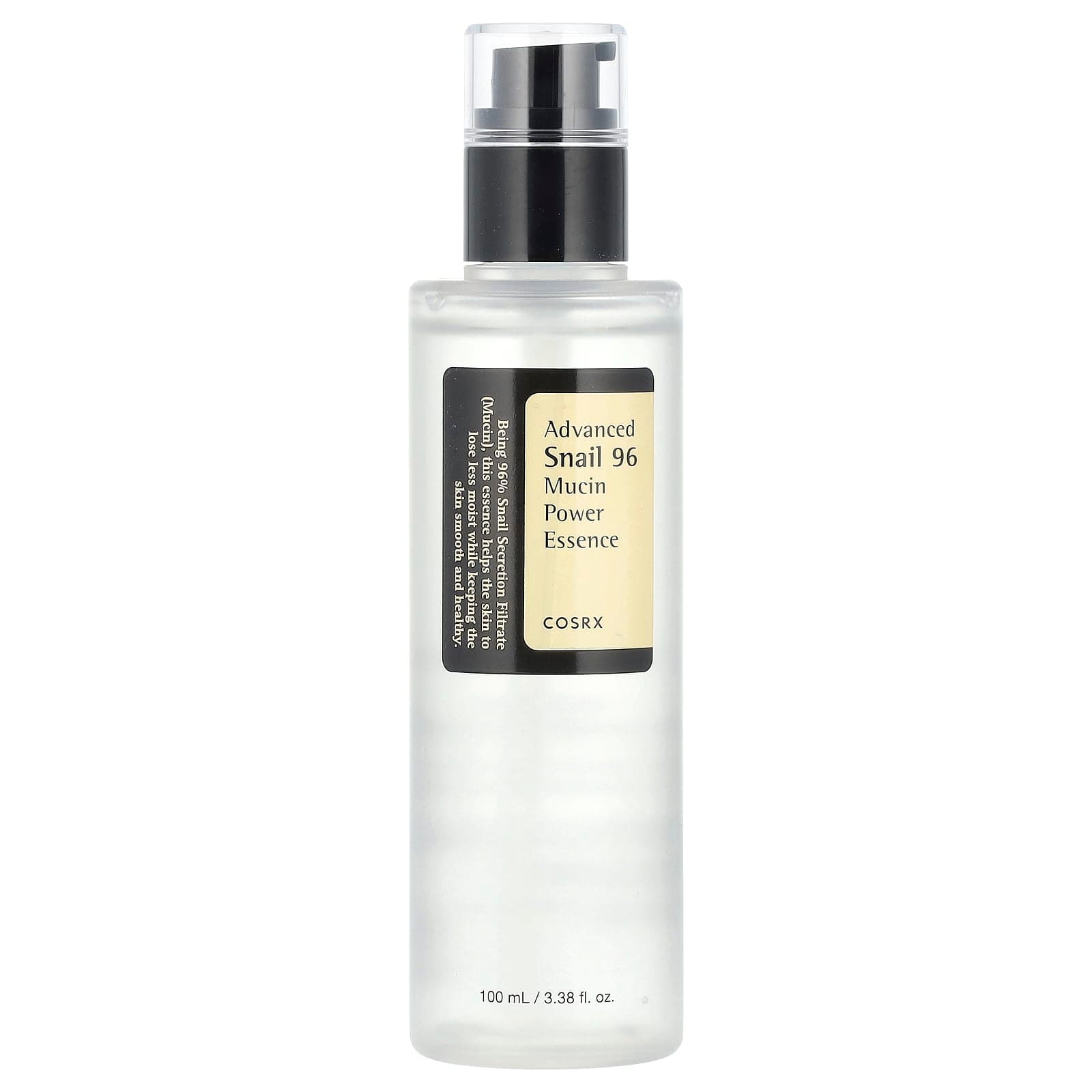
COSRX Advanced Snail 96 Mucin Power Essence
Snail mucin contains natural glycolic acid and supports skin repair, both of which contribute to fading PIH over time. It's not a dedicated brightening product, but it supports the process while providing essential hydration.
Best for: PIH, especially from recent acne — the repair-supporting properties help prevent marks from deepening
Beauty of Joseon Relief Sun
Sunscreen is the most important product in any hyperpigmentation routine. UV exposure triggers melanin production and darkens existing spots. Every minute of sun protection prevents new pigment from forming and prevents existing spots from getting worse.
Best for: Prevention, which is the most effective treatment strategy
The Hyperpigmentation Routine
Morning:
- Gentle cleanser
- Beauty of Joseon Glow Serum (niacinamide for melanin inhibition)
- COSRX Snail 96 Mucin Essence (hydration and repair)
- Moisturizer
- Beauty of Joseon Relief Sun (absolutely essential — apply generously)
Evening:
- Double cleanse (to thoroughly remove sunscreen)
- Some By Mi AHA BHA PHA Toner OR COSRX BHA Liquid (2-3x per week)
- Beauty of Joseon Glow Serum
- COSRX Snail 96 Mucin Essence
- Moisturizer
Realistic Expectations
Let's be clear about timelines:
- Superficial PIH (pink/red marks): 2-4 months with consistent treatment
- Deeper PIH (brown/dark marks): 4-8 months
- Sun spots: 6-12 months, and they'll return without consistent sunscreen use
- Melasma: Ongoing management; may never fully resolve with topical treatment alone
If you're not seeing any improvement after 3 months of consistent use, consider consulting a dermatologist. Prescription options like tretinoin, hydroquinone (short-term), or in-office treatments like chemical peels and laser therapy may be necessary for stubborn pigmentation.
The Critical Role of Sunscreen
This deserves its own section because it cannot be overstated: sunscreen is the single most important product for treating and preventing hyperpigmentation. Even a small amount of unprotected UV exposure can undo weeks of brightening treatment progress.
Apply SPF 50+ PA++++ every morning. Reapply every 2 hours if you're outdoors. Wear a hat when possible. This isn't optional — it's the difference between a brightening routine that works and one that doesn't.
The Bottom Line
Hyperpigmentation requires patience, consistency, and sun protection. K-Beauty offers effective, affordable tools for every step of the process — from niacinamide serums that inhibit melanin to gentle exfoliants that speed cell turnover to sunscreens that prevent new damage. Layer these ingredients strategically, protect your skin from UV, and give your routine at least 3 months before judging results. The spots will fade. It just takes time.
Keep Reading
How Brazilian dermatologists treat melasma differently
Brazil sees melasma at rates the rest of the world hasn't reckoned with — UV exposure, ethnic diversity, and hormonal patterns combine to make pigmentation the country's defining skincare concern. Brazilian dermatologists built a treatment protocol around tinted clinical sunscreens (color FPS70, FPS80), vitamin C ampoules at clinical concentration, niacinamide-glycolic combinations, and a derm-channel pharmacy ecosystem (Adcos, Mantecorp, Episol, Ada Tina) that the global market is only beginning to discover.
Why Spanish Pharmacies Do Melasma Better Than Anyone
Spain has spent a century building the world's deepest pharmacy-channel toolkit for melasma, post-inflammatory hyperpigmentation, and sun damage. Here's the full Spanish pharmacy depigmentation protocol — what to layer, in what order, and how to avoid the common mistakes.