At Homefacial massage
Gua Sha
Medically reviewed by ChokChok · Updated March 27, 2026
Ask ChokChok AI
Get instant answers about Gua Sha
Try asking
Powered byCHOKCHOK
An ancient Chinese technique adapted for modern facial use — a flat stone tool is stroked along facial contours to promote lymphatic drainage, reduce puffiness, and sculpt facial muscles.
How It Works
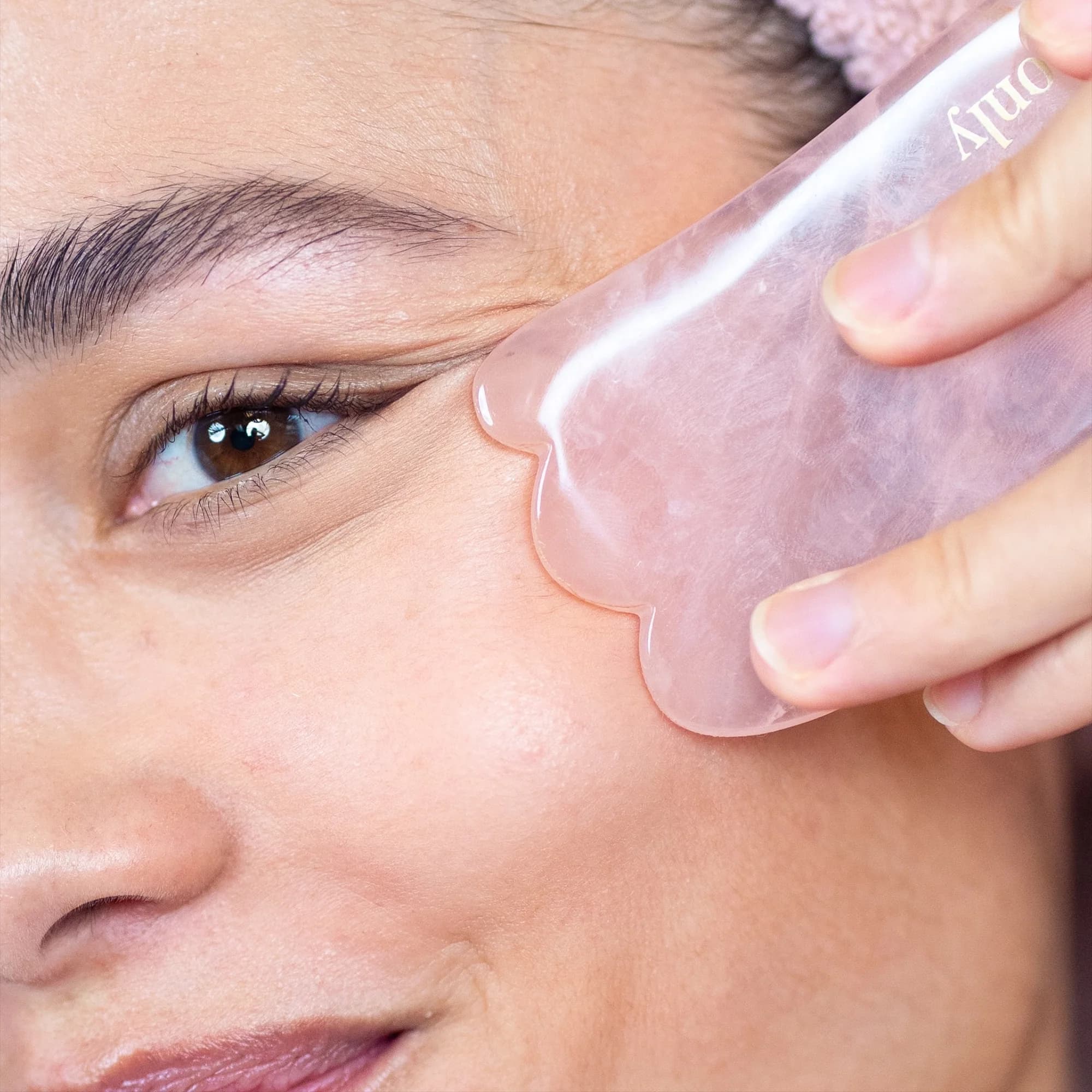
Gua sha uses a smooth-edged stone (typically rose quartz, jade, or bian stone) held at a 15-degree angle to the skin. Light to medium pressure strokes along lymphatic pathways encourages fluid drainage from the face. The scraping motion also stimulates blood circulation and may temporarily relax facial muscles, reducing tension-related puffiness. Unlike body gua sha, facial gua sha should be gentle — no "sha" (petechiae) should appear.
What to Expect
Apply a generous amount of facial oil first — this is non-negotiable. Work upward and outward: start at the neck (drain first), then jawline, cheeks, undereye, forehead. Each stroke: 3–5 repetitions, gentle pressure. Never drag on dry skin. Morning use reduces overnight puffiness best. Spend 5–10 minutes. Clean stone with soap and water after use. Refrigerate for extra depuffing effect.
Deep Dive
Facial gua sha became a global phenomenon circa 2019, introduced to Western audiences through Korean and Chinese beauty influencers. The traditional tool used in Chinese medicine (for body use) involves firmer pressure to create petechiae — facial adaptation is completely different in technique. Research on facial gua sha specifically is limited but lymphatic drainage benefits are well-established. Popular stones: Herbivore, Mount Lai, Lanshin.
Pros
- ✓ Immediate depuffing results
- ✓ No consumables after initial purchase
- ✓ Deeply relaxing
- ✓ Pairs with any routine
Cons
- ✗ Technique-dependent — wrong technique gives no results
- ✗ No dramatic anti-aging evidence
- ✗ Time investment
Risks & Side Effects
- ⚠ Pressing too hard can cause bruising
- ⚠ Avoid over active acne or broken skin
✓
Pregnancy Safety
Generally considered safe during pregnancy
See It on TikTok
This is not medical advice. Always consult your healthcare provider or dermatologist before trying new treatments, especially in-clinic procedures.
Routines for Related Concerns
Step-by-step K-beauty routines that complement Gua Sha.
Frequently Asked Questions
How often should I do Gua Sha?
Daily to 3–4x per week. Most people see results within immediate puffiness reduction; 4–6 weeks for contouring effects with consistency.
Does Gua Sha hurt?
The pain level for Gua Sha is none. Downtime: None.
Is Gua Sha safe during pregnancy?
Gua Sha is generally considered safe during pregnancy, but always consult your healthcare provider first.
What are the risks of Gua Sha?
The main risks and side effects to be aware of: Pressing too hard can cause bruising; Avoid over active acne or broken skin. Always consult a qualified provider, especially for in-clinic procedures.
How much does Gua Sha cost?
Gua Sha is in the mid-range range. Typical cost: $20–80 for quality stone.